
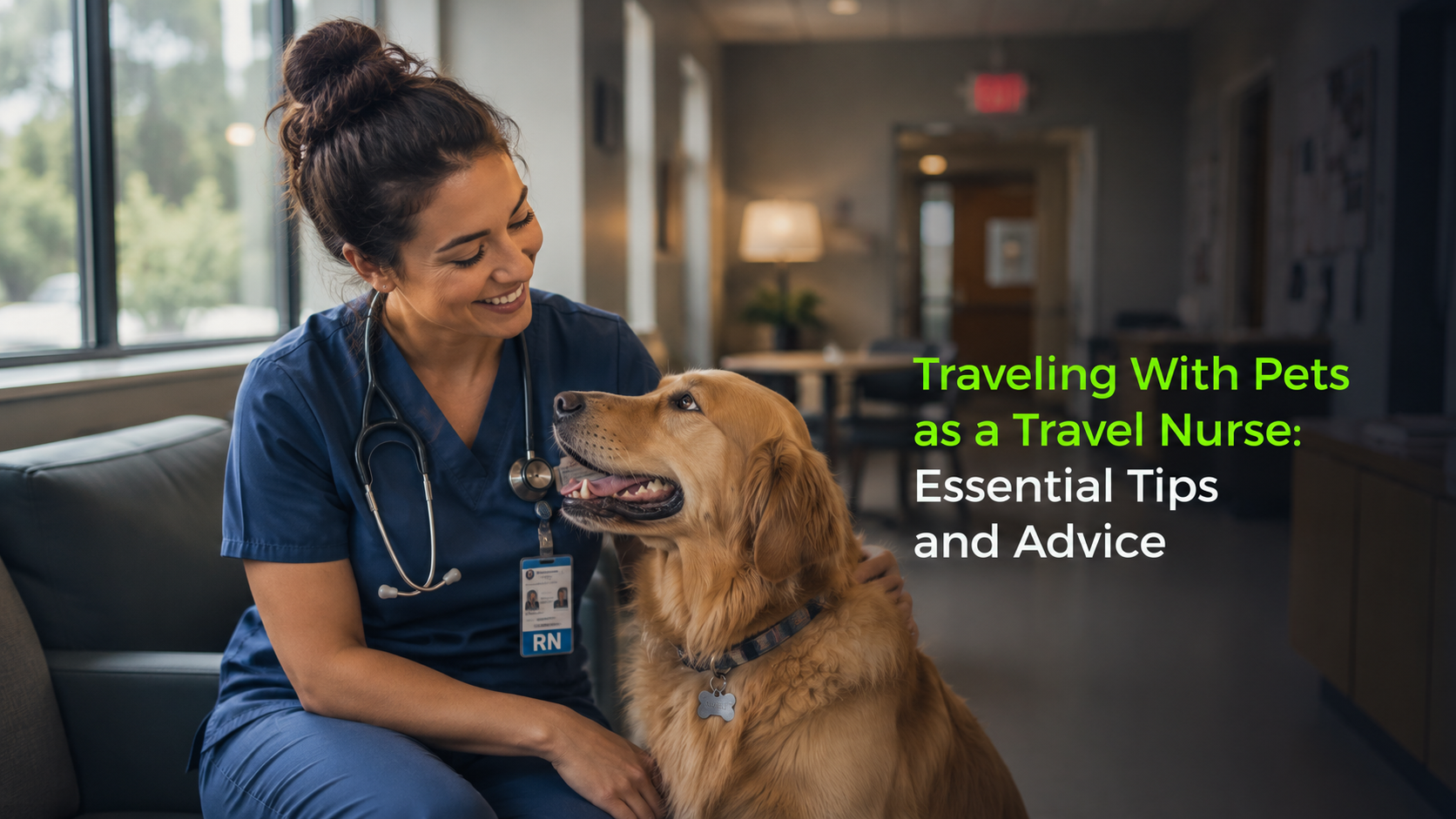
If you’re searching for travel nurse jobs but can’t imagine leaving your pet behind, you’re definitely not alone.
For many travel nurses, pets are family. Whether it’s a dog that’s been with you for years or a cat that keeps you company after long shifts, the idea of taking assignments across the country without them can feel impossible.
The good news? Thousands of travel nurses successfully travel with pets every year.
The reality, though, is that traveling with a pet requires more planning, more budgeting, and a little extra flexibility. Before packing up your car and heading to your next assignment, it’s important to think through housing, transportation, pet care during long shifts, emergency vet situations, and whether your pet will actually enjoy the travel lifestyle.
Here’s what travel nurses should know before bringing pets on assignment.
Can You Bring Pets on Travel Nurse Assignments?
Absolutely.
Many travel nurse jobs are pet-friendly, especially as more furnished housing providers and short-term rentals adapt to the travel healthcare industry.
However, bringing pets does limit some housing options, and you’ll need to plan earlier than travelers without pets.
The most common pets travel nurses bring include:
- Dogs
- Cats
- Small caged pets
- Fish tanks (less common due to moving logistics)
Dogs are by far the most common travel companions because they adapt well to routines, road trips, and outdoor adventures.
Will Your Pet Actually Enjoy Travel Nursing?
This is one of the biggest questions travel nurses should honestly ask themselves.
Some pets thrive in new environments, while others become stressed from:
- Frequent moving
- Long car rides
- New apartments
- Different climates
- Being alone in unfamiliar places
Dogs
Many dogs love travel nursing life, especially active breeds that enjoy hiking, beaches, parks, and spending time outdoors.
If your dog enjoys car rides, adapts well socially, and handles new environments easily, they may love the experience.
Cats
Cats can be more challenging because they’re usually more attached to familiar environments.
Some cats adjust quickly, while others experience anxiety during moves.
Senior Pets
Older pets may struggle more with frequent travel, long drives, stairs, and climate changes. In some situations, staying with trusted family members may actually be less stressful for them.
How to Travel Safely With Your Pet
Use Proper Car Restraints
Pets should never roam freely in your vehicle.
For dogs, use:
- Crash-tested harnesses
- Backseat restraints
- Secure carriers
For cats:
- Use ventilated carriers
- Avoid letting them roam freely in the car
Plan Frequent Stops
If you’re driving across multiple states for an assignment:
- Stop every few hours
- Allow bathroom breaks
- Keep water available
- Give dogs time to exercise
Keep Medical Records Accessible
Always travel with:
- Vaccination records
- Rabies documentation
- Medication lists
- Your veterinarian’s contact information
Many furnished rentals require proof of vaccinations before approving pets.
What About Housing?
Housing is usually the biggest challenge for travel nurses with pets.
Many short-term rentals charge:
- Pet deposits
- Monthly pet rent
- Cleaning fees
- Higher overall rent
Typical Pet Housing Costs
You may encounter:
- $200–$500 pet deposits
- Monthly pet fees
- Non-refundable cleaning fees
Tips for Finding Pet-Friendly Housing
- Start searching early
- Use Furnished Finder or Airbnb monthly stays
- Join travel nurse housing groups
- Stay outside expensive downtown areas
- Travel with another nurse to split costs
Suburban areas often have larger apartments, dog parks, and lower rent prices compared to city centers.
What Happens During Long 12-Hour Shifts?
This is one of the most important questions to think through before bringing a dog on assignment.
Most travel nurse jobs involve:
- 12-hour shifts
- Commute time
- Possible overtime
- Busy schedules
That means your dog could potentially be alone for 13–14 hours some days.
Options for Pet Care During Shifts
Doggy Daycare
Many travel nurses use doggy daycare on workdays to provide:
- Exercise
- Socialization
- Supervision
- Reduced separation anxiety
Dog Walkers
Pet services can help with:
- Midday walks
- Feeding visits
- Bathroom breaks
- Check-ins during shifts
Traveling With a Partner
Some travel nurses bring partners who work remotely, making pet care much easier during long shifts.
Choosing Lower-Maintenance Pets
Cats are often easier for travel nursing schedules because they generally tolerate longer periods alone.
What If Your Pet Gets Sick on Assignment?
Emergency vet situations can be stressful, especially in an unfamiliar city.
Before starting an assignment:
- Research nearby emergency vets
- Locate a local veterinarian
- Save emergency numbers in your phone
- Find the nearest 24-hour animal hospital
Should You Get Pet Insurance?
For many travel nurses, pet insurance is worth considering.
Pet emergencies can become extremely expensive while traveling.
Depending on the policy, pet insurance may help cover:
- Emergency visits
- Surgeries
- Medications
- Diagnostic testing
Most travel nurse employers do not directly provide pet insurance as part of benefits packages, so travelers usually purchase coverage independently.
What to Do With Your Pet on Days Off
One of the best parts about travel nursing with pets is exploring new places together.
On your days off, you can:
- Visit dog-friendly beaches
- Explore hiking trails
- Find outdoor restaurants
- Visit local dog parks
- Take weekend road trips
- Enjoy coffee shops and patios together
Many travel nurses intentionally choose assignments in outdoor-friendly cities because it benefits both them and their pets.
Should Your Pet Stay With Friends or Family Instead?
Sometimes the best decision is leaving your pet with trusted friends or family temporarily.
That may be the better option if:
- Your pet has health issues
- Your pet struggles with anxiety
- Your schedule will be extremely demanding
- You’re taking very short assignments
- Your housing situation is uncertain
Some pets genuinely thrive on the road, while others feel more comfortable in familiar environments.
The decision should ultimately be based on your pet’s personality and needs.
Final Thoughts on Travel Nurse Jobs With Pets
If you’re considering travel nurse jobs and want to bring your pet along, preparation is everything.
Before accepting an assignment:
- Research pet-friendly housing early
- Budget for extra pet-related expenses
- Plan for long shifts
- Locate emergency veterinarians
- Think honestly about your pet’s needs
For the right traveler and the right pet, travel nursing can become an incredible shared adventure.
Whether you’re hiking mountain trails, walking on the beach, or exploring a new city together, bringing your pet can make assignments feel much more like home.
Looking for Your Next Travel Nurse Assignment?
Explore travel nurse jobs across the country and find assignments that fit both your career goals and your lifestyle.